S. B. Gardi
DEPARTMENT OF ENGLISH
M.K.BHAVNAGAR
University
Written by:- Dodiya Asha B
Course No:-07
Email Id :- ashadodiya15@gmail.com
Enrolment no :- PG15101012
Topic:- Tradition and
Individual Talent
Introduction
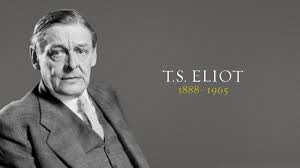
T.S.Eliot’s “Tradition and Individual
Talent” was published in 1919 in The Egoist - the Times Literary supplement. .
Later, the essay was published in The Sacred Wood: Essays on Poetry
and Criticism in 1920/2. This essay is described by David Lodge as the
most celebrated critical essay in the English of the 20th century. The essay is
divided into three main sections:
1
the first gives us Eliot’s concept of tradition;
2 the
second exemplifies his theory of depersonalization and poetry. And in
3
the third part he concludes the
debate by saying that the poet’s
sense of tradition and the impersonality of poetry are complementary things.
At the outset of the
essay, Eliot asserts that the word ‘tradition’ is not a very favourable term
with the English who generally utilize the same as a term of censure. The
English do not possess an orientation towards criticism as the
“Tradition and Individual Talent:-

Thomas Stearns Eliot was an American-born English poet,
playwright, and literary critic, arguably the most important English-language
poet of the 20th century. Eliot was awarded the Nobel Prize for literature in
1948. His most famous work is “The Waste
Land.” On one level this highly complex poem describes cultural and spiritual
crisis.
"The point of view which I am struggling
to attack is perhaps related to the metaphysical theory of the substantial
unity of the soul: for my meaning is, that the poet has, not a 'personality' to
express, but a particular medium, which is only a medium and not a personality,
in which impressions and experiences combine in peculiar and unexpected
ways."
Poetry
 “Tradition and Individual
Talent (1920)” The sacred wood: Essays
on poetry and criticism A choice of Kipling’s
verse ( 1941) The Frontiers of
criticism (1956)
“Tradition and Individual
Talent (1920)” The sacred wood: Essays
on poetry and criticism A choice of Kipling’s
verse ( 1941) The Frontiers of
criticism (1956)
Eliot
is most often known for his poetry, he also contributed to the field of
literary theory. In this dual role, he acted as poet- critic, comparable to Sir
Philip Sidney and Samuel Taylor Coleridge. “Tradition and Individual Talent” is
one of the more well known works that Elion produced in his critic capacity. It
formulates Eliot’s influential conception of the relationship between the poet
and the literary tradition which precedes him.
T.S.
Eliot’s “Tradition and Individual Talent” was published in
1919 in The Egoist- the Times Literary supplement. Later, the essay was
published in “The Sacred Wood: Essays on poetry and criticism in 1920. This
essay is described by David Lodge as the English of the twentieth century. The
essay is divided into three main sections:-
Eliot
asserts that the word “tradition’’ is not a very favorable term with the
English, who generally utilize the same as a term of censure. The English do
not possess an orientation towards Criticism as the French do; they praise a
poet for those aspects of the work that are individualistic.
1 :- tradition can not be inherited, and involves a
great deal of labor and erudition
2 :- it involves the historical
sense which involves apperception not only of the pastiness of the past, but
also of its present.
3 :- the Historical sense enables a writer to
write not only with his own generation in mind, but with a feeling that the
whole of the literature from Homer down to the literature of his own country
farms a continuous literary tradition.
As
claimed by Chris Baldick that Eliot had created an inverted literary history in
which history being second to the permanent quality of literature, is read
jousted to accommodate it to literature. Therefore, Eliot’s conception of
history is a dynami9c and not static; and is forever in a state of flux.
Eliot’s concept of
tradition:-
Ø In
English criticism ‘Tradition’ is used as a phrase of censure.
Ø Criticism
is indispensable creative activity.
Ø The
importance of Tradition to Individual Talent.
Eliot
presents his Eliot presents his conception of tradition and the definition of
the poet and poetry in relation to it. He wishes to correct for the fact that,
as he perceives it, "in English writing we seldom speak of tradition,
though we occasionally apply its name in deploring its absence Eliot says that
the Englishmen have a tendency to insist, when they praise a poet, upon those
aspects of his work in which he least resembles any one else. In these aspects
of his work they try to find out what is individual, what is the peculiar
essence of that man. They try to find out the difference of the poet with his
contemporaries and predecessors. They try to find out something that can be
separated in order to be enjoyed.
.
Historical
Sense/ “the historical sense involves a perception not only of the pastness of
the past, but of its presence”
According to Eliot,
knowledge of tradition plays vital role in the development of personal talent,
He writes: ‘Tradition is a matter of much wider significance. It can not be
inherited and if you want it you must obtain it by great labour. It involves the
historical sense.’
This
means sense involves a perception, not only of the pastness of past, but of its
presence. This historical sense, which is a sense of the timeless as well as of
the temporal and of the timeless and of the temporal together, is what
makes a write traditional and it is at the same time what makes a
writer most acutely conscious of his place in time, of his
contemporaneity. For Eliot, the term "tradition" is imbued
with a special and complex character. It represents a "simultaneous
order.
Eliot
gives importance to the interdependence of past and the present. He finds not
contradictory but supplementary elements in the co- relationship of the past
and the present.
He expresses his views as follows:-
“No
poet, no artist of any art, has his complete meaning alone. His significance,
his appreciation is the appreciation of his relation to the dead poets and
artist. You can not value him alone; you must set him, for contrast and
comparison, among the dead. Mean this as a principle of aesthetic, that he
merely historical criticism. The necessity that he shall conform, that he shall
cohere, is not one-sided; what happens when a new work of art is created is
something that happens simultaneously to all the works of art which preceded
it. The existing monuments form an ideal order among themselves, which is
modified by the introduction of the new work of art among them.
The relation of a poet ‘s
work to the great works of the past :-
Eliot
is of the view that the present work of art should not be judged by the
standards of the past. The present work may or may not conform to the standards
of the past, but it should not decide whether the work of art is good or bad.
Eliot explains it as “In a peculiar sense he will be aware also that he must
inevitable be judged by the standards of the past, I say judged, not amputated,
by them; not judged to bee as good as, or worse Eliot explains it as “In a
peculiar sense he will be aware also that he must inevitable be judged by the
standards of the past, I say judged, not amputated, by them; not judged to bee
as good as, or worse or better than, the dead and; certainly not judged by the
canons of dead critics.
Part 2 :-
Eliot’s theory of poetic process
and the process of depersonalization:-
Eliot
starts the second part of his essay with:
“Honest criticism and
sensitive appreciation is directed not upon the poet but upon the poetry.”
The artist or the
poet adopts the process of depersonalization, which is “a continual surrender of
himself as he is at the moment to something which is more valuable. The
progress of an artist is a continual self – sacrifice, a continual extinction
of personality”There
still remains this process of depersonalization and its relation to sense of
tradition. The mature poet is viewed as a medium, through which tradition is
channeled and elaborated. He compares the poet to a catalyst in a chemical
reaction, in which the reactants are feelings, and emotions that are
synthesized to create an artistic image that captures and relays these same
feelings and emotions. While the mind of the poet is necessary for the
production, it emerges unaffected by the process.
Eliot
explains his theory of depersonalization more elaborately. He elaborates his
idea by saying that the emotion and experiences in the art are different than
the emotion and experiences of the artist He writes:-
“If
you compare several representative passages of the greatest poetry, you see how
completely any semi ehical eriterion of “sublimity” misses the mark. For it is
not the “greatness” the intensity, of the emotions, the components, but the
intensity of the artist process, the pressure, so to speak, under which the
fusion takes place that counts”
He further writes:-
“The
poet has, not a ‘personality’ to express, but a particular medium which is only
a medium and not a personality in which
impressions and experiences combine in peculiar and unexpected ways. In
impressions and experiences which are important for the man may take no place
in the poetry and those which become important in the poetry may play quite a
neglible part in the man, the personality.”
“Emotion recollected in
tranquility” is an inexact formula for it is neither emotion, nor recollection,
nor with without distortion of meaning, tranquility.”
.
Part 3
:-
The third part he concludes
the debate by saying that the poet’s sense of tradition and the impersonality
of poetry are complementary things.
In
the last section of this essay; Eliot says that poet’s sense of tradition and
the impersonality of poetry are complementary things. He writes “To divert interest from
the poet to the poetry is a laudable aim: for it would conclude to a juster
estimation of actual poetry, good and bad.” Finally he ends his essay with:
“very few know when ether is expression of significant emotion, emotion which
has its life in the poem and not in the history of the poet.
Conclusion:-
To
conclude, Harold Bloom presents a conception of tradition that differs from
that Eliot. Where as Eliot believes that the great poet is faithful to his
predecessors and evolves in a concordant manner, Bloom according to his theory
of ‘anxiety
of influence envisions the strong poet to engage in a much more aggressive and
tumultuous rebellion against tradition’
In
1964, his last year, Eliot published in a reprint of the use of
poetry and the use of criticism, a series of lectures he gave at Harvard
university in 1932 and 1933, a new preface in which he called “Tradition and
the Individual talent” the most juvenile of his
essays.


